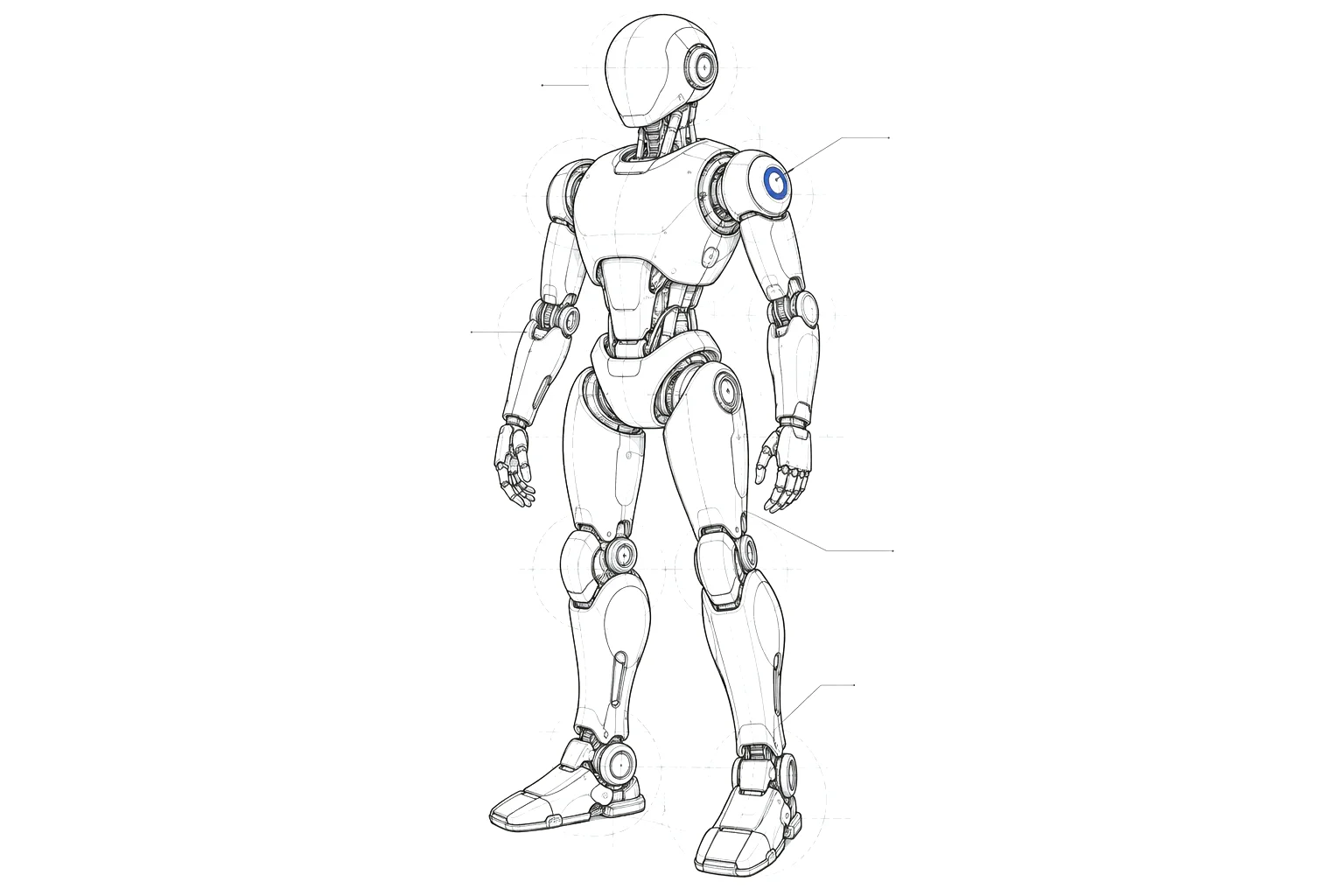
Can a humanoid do your laundry yet? Folding, mostly
We walked one load from hamper to drawer and checked each step against what robots have actually shown in public.
The setting
Laundry is the chore home-robot makers name first. 1X lists "folding laundry" among the jobs its $20,000 NEO is meant to do. LG built its CLOiD concept robot around starting wash cycles and folding what comes out of the dryer. Figure picked towel folding as one of three test chores for Helix 2.5.
It is easy to see why. Laundry is frequent, boring and physical, and it happens in every home. It is also a good test of a robot, because cloth has no fixed shape. A mug is always a mug. A T-shirt pulled from a dryer is a different puzzle every time.
We walked through a single load, from hamper to drawer, and checked each step against what has actually been shown in public.
What a humanoid would need to do
A full load breaks into roughly six jobs:
- Collect. Find the hamper, or pick clothes off the floor, and carry them to the machine.
- Sort. Separate darks from lights and pull out anything that should not go in the wash. This means reading labels or at least colours.
- Load and start. Open the washer, put the clothes in, add detergent, choose a cycle, press start.
- Transfer. Move wet, heavy, tangled clothes into the dryer, then start it.
- Fold. Take out a jumble of mixed items and fold each one the way the household likes: towels, shirts, trousers, pairing socks.
- Put away. Carry the piles to the right rooms and into the right drawers and shelves.
Each step also needs the robot to cope with small surprises: a sock stuck to the drum, a door that sticks, a cat in the basket.
What has actually been demonstrated
Folding towels in unfamiliar homes. This is the strongest evidence. In September 2026, Figure reported that one Helix 2.5 model tidied rooms, folded towels and made beds across 30 homes it had never seen, with no data collected in any of them. Success was all-or-nothing: "all towels are folded and placed in the basket." Across the three chores together, Figure 03 finished 56% of attempts. Figure did not publish the towel-only rate.
Folding laundry as one skill among many. Physical Intelligence says its π0.7 model, released in April 2026, matched specialist models on tasks including "making coffee, folding laundry, and assembling boxes." That is a claim about a general model keeping up with purpose-trained ones, not about handling a whole load.
Starting a wash and folding, as a concept. LG showed CLOiD at CES in January 2026 doing laundry tasks, but Engadget reported that LG itself called it "more of a concept," with no product plans. Tom's Guide watched it on the show floor and described it as "quite slow and deliberate," leaving one towel "in a crumpled heap" while a company rep stepped in to straighten it.
Laundry with a human at the controls. 1X's plan for NEO is honest about the gap. For "any chore that NEO doesn't yet know, owners could schedule a 1X teleoperator to guide it," according to The Robot Report. 1X opened its Hayward, California factory on April 30, 2026 with first customer shipments planned for 2026. We have not seen a published measure of how much of NEO's laundry work runs without a remote operator.
Learning a new chore from one video. Skild AI says its S1 model can pick up an unseen task from a single human video, at a 66% per-step success rate. No laundry task was shown, but if it works in homes, it is the kind of method that could teach a robot your particular way of folding.
The gap
Put the steps next to the evidence and the picture is lopsided.
- Folding has real, measured progress, mostly on towels, which are the easiest item: flat, rectangular, forgiving. We have seen no public, measured result for a mixed load of shirts, trousers, fitted sheets and socks.
- Collecting and carrying are plausible. Figure's living-room tidy shows a humanoid can find and pick up many small objects in a real home, and bending to the floor is exactly what legs are for.
- Sorting, loading, dosing detergent and running the machines are the missing middle. We found no public demonstration with success rates of a humanoid sorting a load, operating a washer and dryer, and moving wet clothes between them.
- Putting away into the right drawers in the right rooms has not been shown in any source we could find.
- Speed is unknown. None of the results above publish how long a fold takes.
Our read: the first laundry help you can buy will be folding-and-carrying, with a person, or a remote operator, handling the machines. A robot that does the whole load, hamper to drawer, on its own has not been demonstrated anywhere we can find. When one is, we will want to see the success rate, the time per load and how many of those loads needed a human.
We labeled this story Research — A lab result, not a product. How we label claims
Sources
- Helix 2.5: Zero-Shot 30-Home Generalization17 Sep 2026
- Physical Intelligence says its new robot brain can figure out tasks it was never taught16 Apr 2026
- LG reveals its laundry-folding robot at CES 20264 Jan 2026
- I saw the LG CLOiD robot fold laundry at CES 2026 — it did not go well7 Jan 2026
- NEO humanoid designed for household use, available for preorder30 Oct 2025
- 1X Opens NEO Factory in Hayward, CA, with Consumer Shipments Planned for 202630 Apr 2026
- Introducing S1: In-Context Learning for RoboticsAug 2026