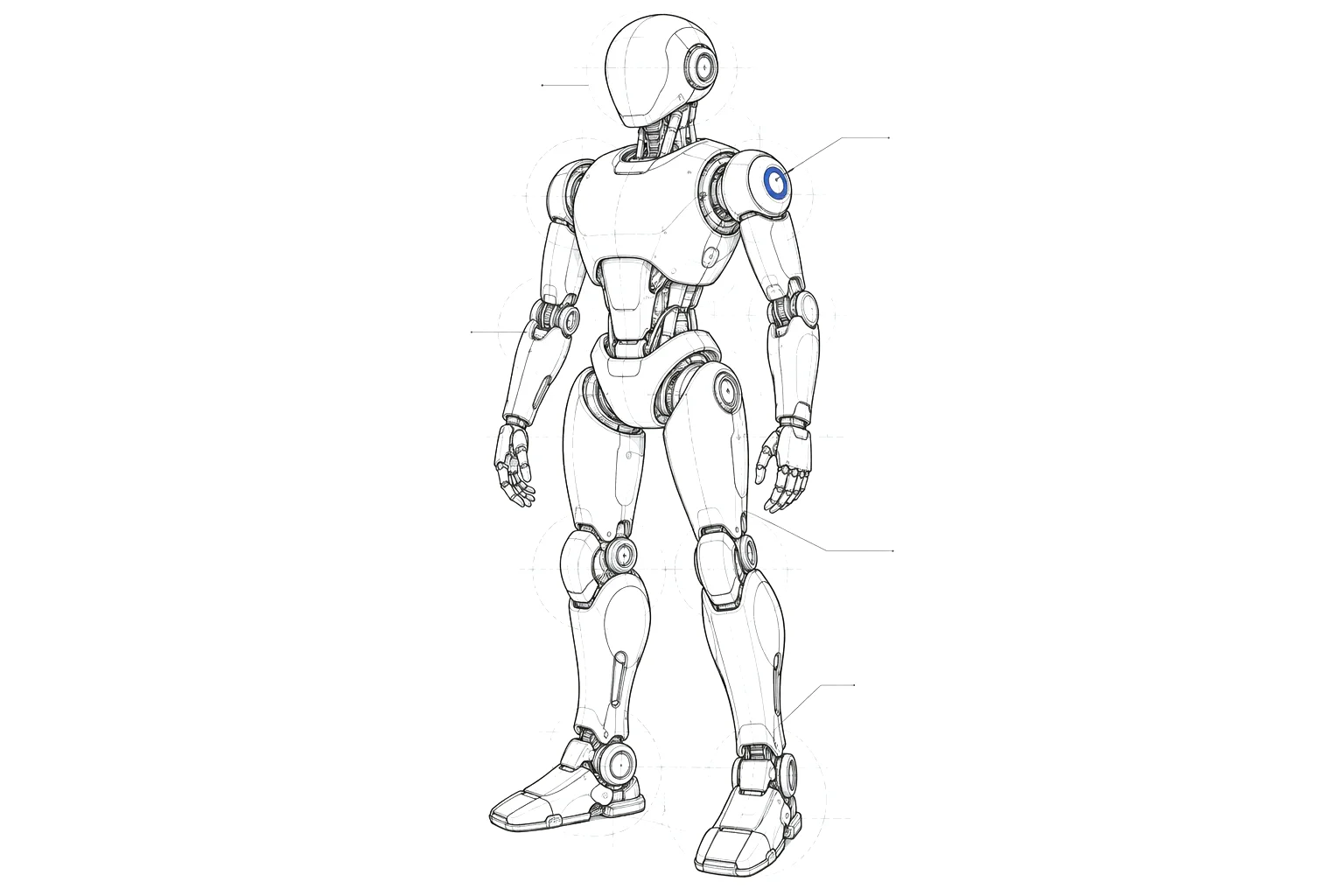
XPeng opens its IRON humanoid production line: what the release does and doesn't say
The line is running and the first robot walked off it; capacity, price and a home use case are still missing.
Looking ahead, XPENG robots are scheduled to enter mass production by the end of this year, with initial commercial-scenario rollouts beginning in XPENG's own stores and campuses.XPeng press release, 2026-09-07
What they said
On 7 September 2026 XPeng announced that its humanoid robot production lines in China are running, and that the first IRON off the line walked away from the final station on its own. The company calls the lines "the world's first automated production lines for advanced humanoid robots" and says more than 80% of core processes are automated.
The release repeats the next-generation IRON's headline specs: 76 degrees of freedom across the body, 21 in each hand, and three in-house Turing AI chips delivering "up to 2,250 TOPS of effective computing power." XPeng says that compute lets IRON "autonomously perform complex tasks without remote operation."
On timing, XPeng says its robots "are scheduled to enter mass production by the end of this year," with the first commercial use in XPeng's own stores and campuses. Official market launch and delivery in China and overseas are planned for 2027. The release also restates that XPeng's robotics business raised more than US$900 million on 24 August at a post-money valuation of more than US$6.3 billion.
What is verified
The event itself is on the record. XPeng is a listed company (NYSE and HKEX) and the announcement went out through PR Newswire; CnEVPost reported the line opening the next day. CnEVPost notes that IRON was first unveiled in November 2025, so the path from reveal to a running line took about ten months.
The specs are XPeng's own numbers. The degrees of freedom, hand count and TOPS figure all come from the company, and we have not seen independent measurement of any of them.
What is missing
Quite a lot, and all of it matters to a buyer.
- Capacity. "Over 80% of core processes automated" describes how the line works, not how many robots it makes. XPeng gives no units per day, per week or per year.
- Price. There is no price. The release says only that gross margin per unit "is expected to be significantly higher than that of new energy vehicles," which tells you about XPeng's business plan and nothing about what a robot will cost you.
- Height, weight, runtime and payload. None of the basics a home buyer compares are in the release.
- What "without remote operation" covers. XPeng says IRON can perform complex tasks without a remote operator. It does not say which tasks, how often it succeeds, or whether remote help exists as a fallback.
- Who the first customers are. The first deployments are in XPeng's own stores and campuses. That is a controlled setting run by the maker, not a customer's building, and certainly not a home.
What it means for a home robot
A working production line is real progress, and it is the step many humanoid companies have not reached. Building a robot that walks off an assembly line under its own power is a different problem from building one that does a useful job in a stranger's kitchen, though. XPeng's own plan puts shop floors and showrooms first, with a broader launch in 2027.
For readers in the US there is a second wall. On 28 July 2026 the FCC added foreign-produced "advanced robotic devices," including humanoids, to its Covered List. The International Federation of Robotics summarises the effect: new covered products "will no longer be eligible to receive the FCC equipment authorizations required for importation, marketing, and sale in the United States." A new China-built humanoid such as the next-generation IRON would need a Conditional Approval to be sold here, and we have seen no sign that XPeng has applied.
So we label this promise. The line is real; the robot for sale, the price and the home use case are all still dated in the future. We will move IRON's status when XPeng publishes production numbers or ships to a customer outside its own walls.
We labeled this story Promise — The company said it will happen. How we label claims