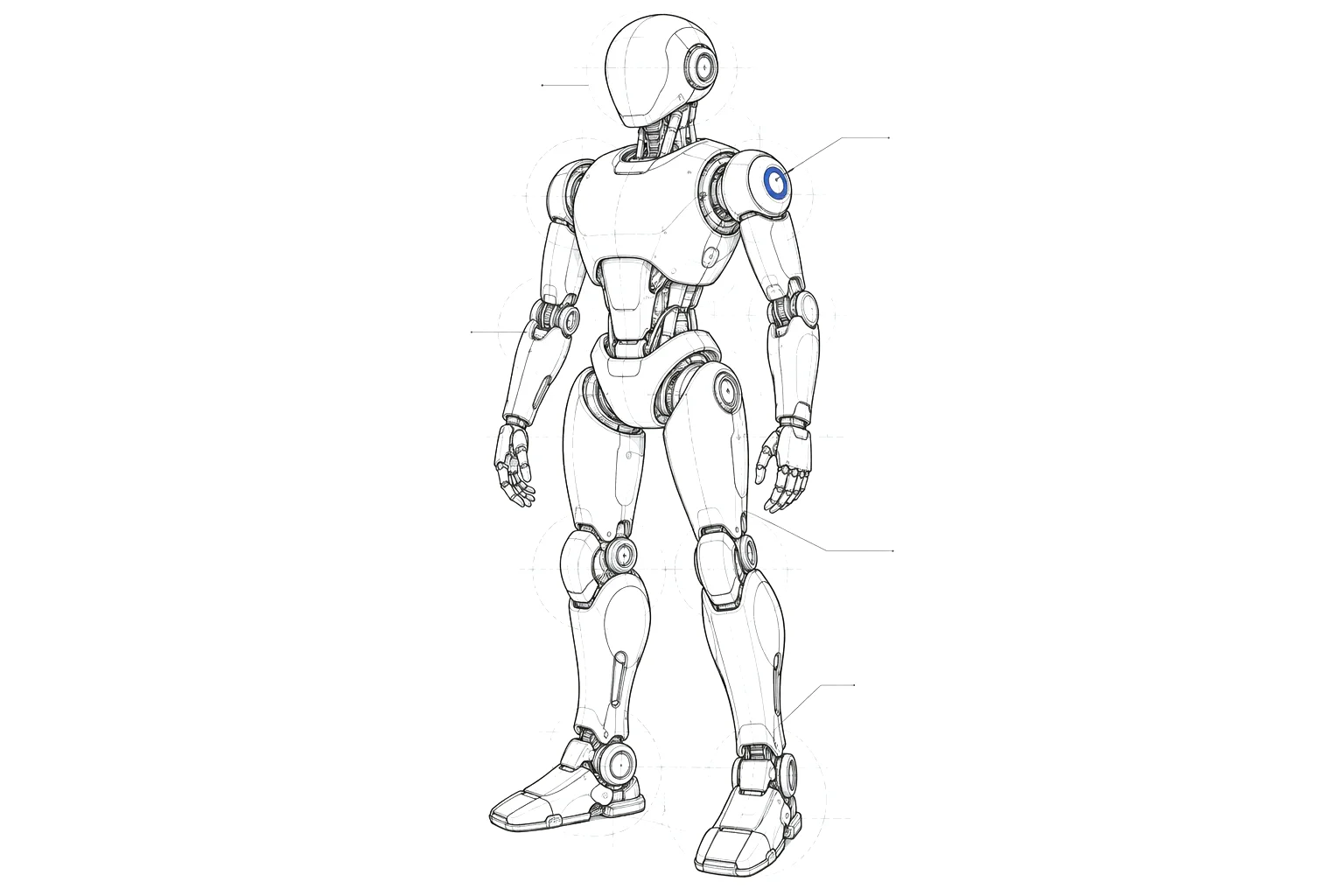
Tesla is reportedly making hundreds of Optimus robots a week. They are not home robots.
A reported Fremont ramp adds a production number to Tesla's plan, while the company still describes the early builds as internal training hardware.
The initial Optimus builds will be used in our Optimus Academy for training data collection and further functionality development.Tesla Q2 2026 Update
Tesla is reportedly building several hundred Optimus humanoid robots each week at Fremont, roughly ten times the few dozen a week reported during second-quarter small-batch testing. That is a production-ramp report, not a customer-delivery report. The units are still for Tesla's own testing, data collection and development.
The distinction matters. A robot that can be assembled repeatedly is not necessarily a robot a household can buy, trust around people, or ask to handle an unfamiliar chore. Tesla has not announced an Optimus order page, price, consumer delivery date, or verified home deployment.
What they said
Tesla's July Q2 2026 update said it had decommissioned the Model S and Model X lines at Fremont and was installing first-generation Optimus lines. The company said it expected production to start soon and that the initial builds would be used in its Optimus Academy for training-data collection and further functionality development.
On September 25, Electrek reported, citing a paywalled report from The Information, that output had risen from a few dozen units per week in Q2 to several hundred in August. Electrek also reported that managers were aiming for a continuous automated line capable of more than 1,000 robots a week by year end. Tesla has not publicly confirmed either weekly figure.
The same report says most of the current robots are used internally for testing, training and data collection. It describes factory work in controlled, supervised settings rather than a general-purpose fleet doing varied jobs on its own.
What is verified
Tesla itself has verified the Fremont conversion and its intended use for early builds. Its Q2 update says the former Model S/X lines were decommissioned and that the initial Optimus builds would support training data and functionality development. Those are specific, useful signs that the program has moved beyond a stage-only prototype.
The weekly output figure is not verified by Tesla. It is reported by Electrek through The Information, so we are treating it as a report rather than a company-confirmed count. The report is consistent with Tesla's earlier statement that Fremont would host its first-generation Optimus line, but it does not establish stable volume production.
Tesla also has not shown that an Optimus owner can receive one. There is no public consumer price, reservation process, delivery program or independent evidence of a consumer home using one.
What is missing
The report's most important gaps are reliability and generalization. Electrek says the hands and forearms still involve more than 100 screws and small parts, some touch sensors have reliability problems, and fixtures can struggle with alignment. It also reports that the robot needs days to learn basic tasks and may behave unpredictably outside its specific training. Those claims come from reporting, not from a published Tesla test protocol, but they identify the work between a factory ramp and a useful household product.
We also do not know which Optimus hardware generation is being built at this rate. Electrek reports that the current V3 robots are not the version Tesla expects to commercialize. Tesla's January shareholder update had said Gen 3 was its first design meant for mass production, but the promised Q1 reveal did not occur.
What it means for a home robot
For a household buyer, this is evidence of a serious internal manufacturing program, not a purchase signal. More robots leaving a line can help Tesla gather data and discover weak components. It does not yet answer the questions a home robot must answer: Can it complete a useful task in an unfamiliar room? Can it do so safely without a supervisor? What happens when it encounters a mess, pet, child, or object it has not been trained on?
The present claim is therefore a promise with a reported ramp behind it. Tesla is building toward a larger Optimus program, and reported output is increasing, but the available evidence still places the robot inside Tesla's development loop. Until a buyer receives one and independent reporting shows repeatable work outside that loop, Optimus remains an internal program rather than a home robot.
We labeled this story Promise — The company said it will happen. How we label claims
Sources
- Tesla ramps Optimus to hundreds a week, but the robots can't generalize25 Sep 2026
- Tesla Q2 2026 Update22 Jul 2026
- Tesla Q4 2025 Update28 Jan 2026